Featured

Welcome to my blog

Sometimes it isn’t easy to navigate the terrain that is life. Perhaps you find yourself teetering at the cusp of adulthood, or aimlessly wandering through a new city while thinking to yourself – ‘what’s next?’ It is this fear of the unknown, of being stuck ‘in transit’ that drove me to create this blog, a space where I can share my journey as a twenty something Sydneysider, who is looking to find her voice. The aim of the blog is quite simple: to share all the simple things I love such as travelling & storytelling, and encouraging others to appreciate the small things too. I hope this blog can remind you (and me) that you can happiness wherever you are, and to enjoy the little detours whoever you are on the path you’ve decided to take.

A thought is an idea in transit.

— Pythagoras.

It will feature everything from the new places I’ve explored, to books or films which have left a real impact on me, to the life experiences and knowledge I’ve gained thus far. Dear reader, if you have made it here, I hope you enjoy your stay..

~ Christine

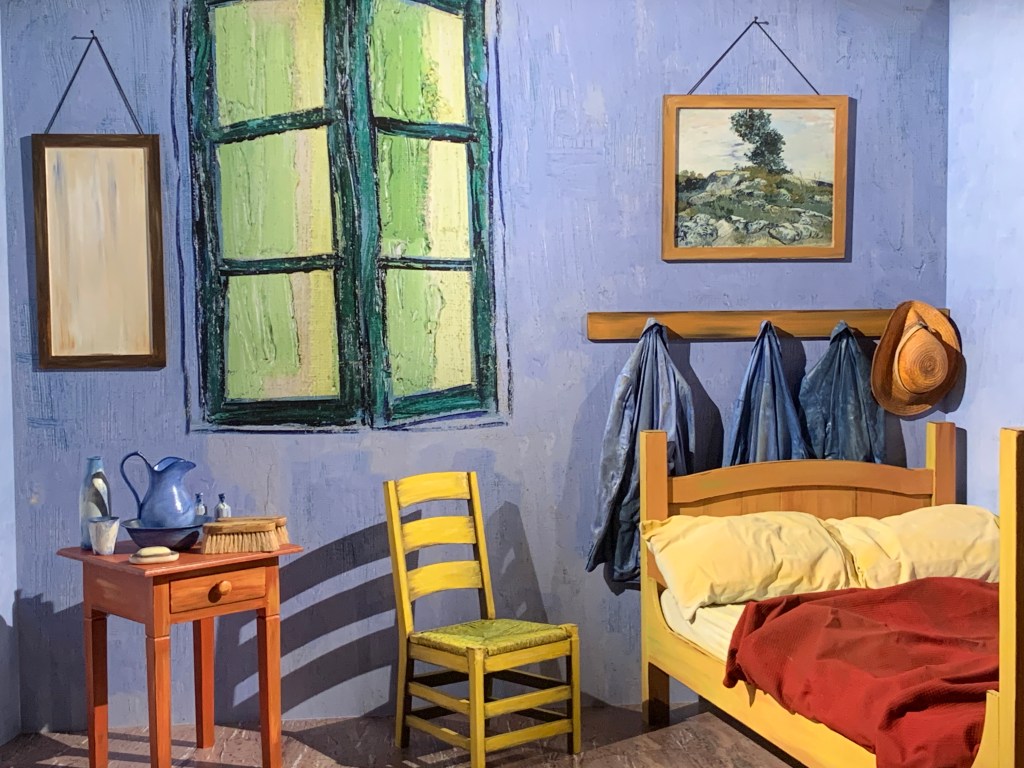
Van Gogh Alive || Immersing myself in a global art exhibition

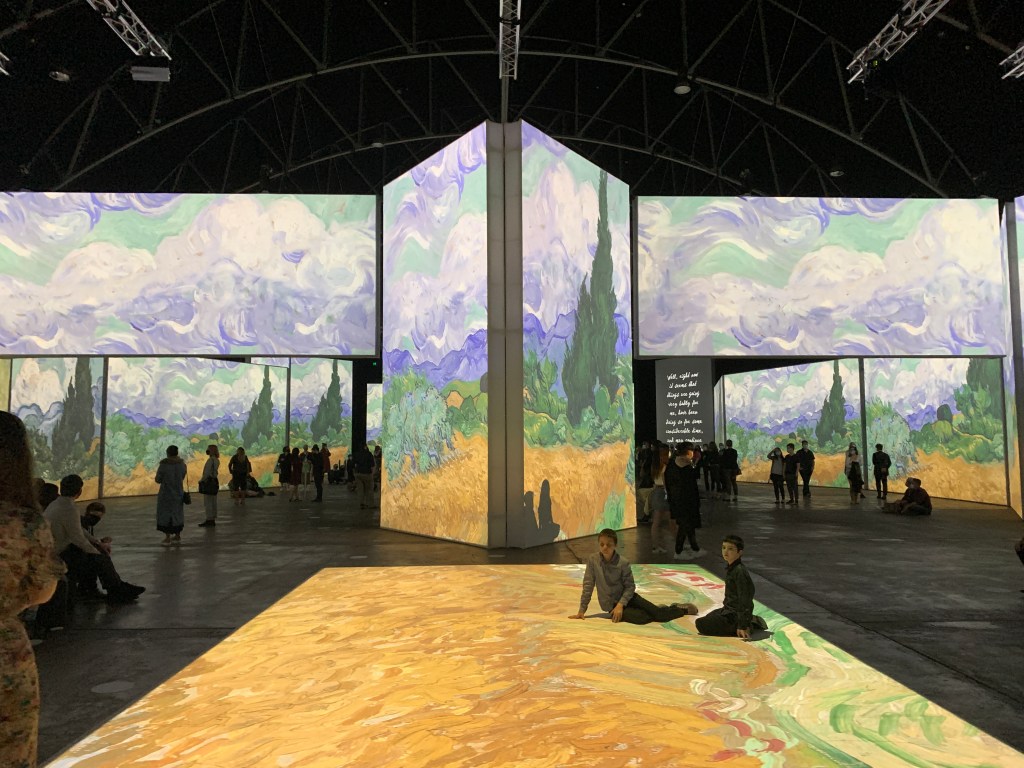
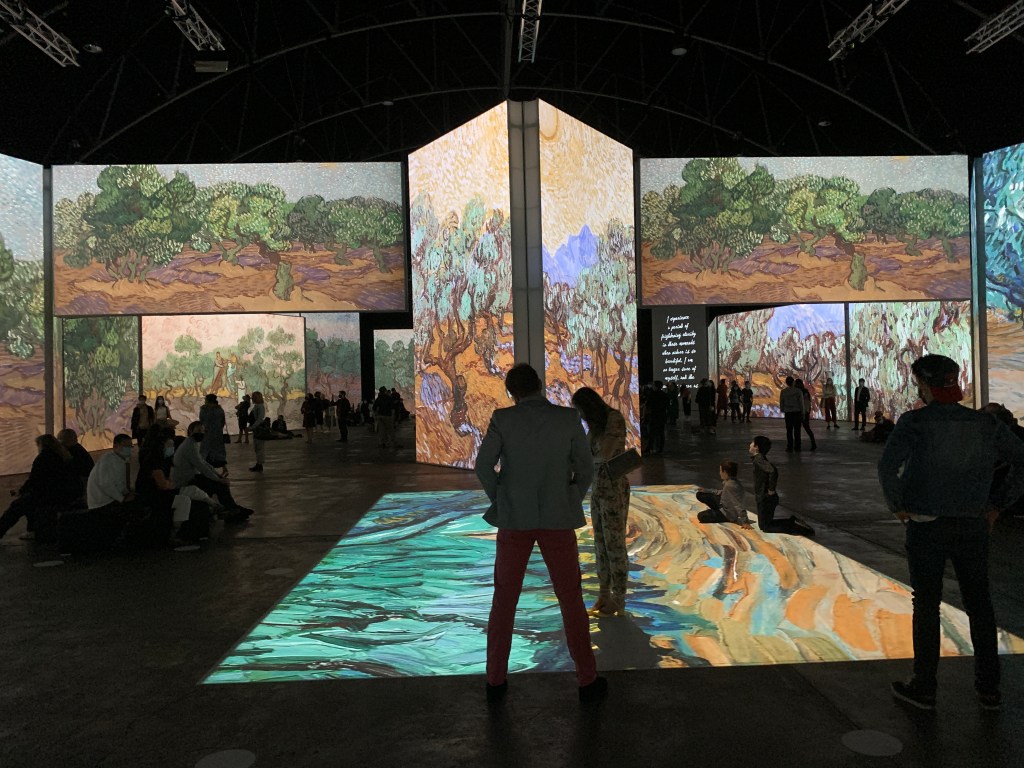
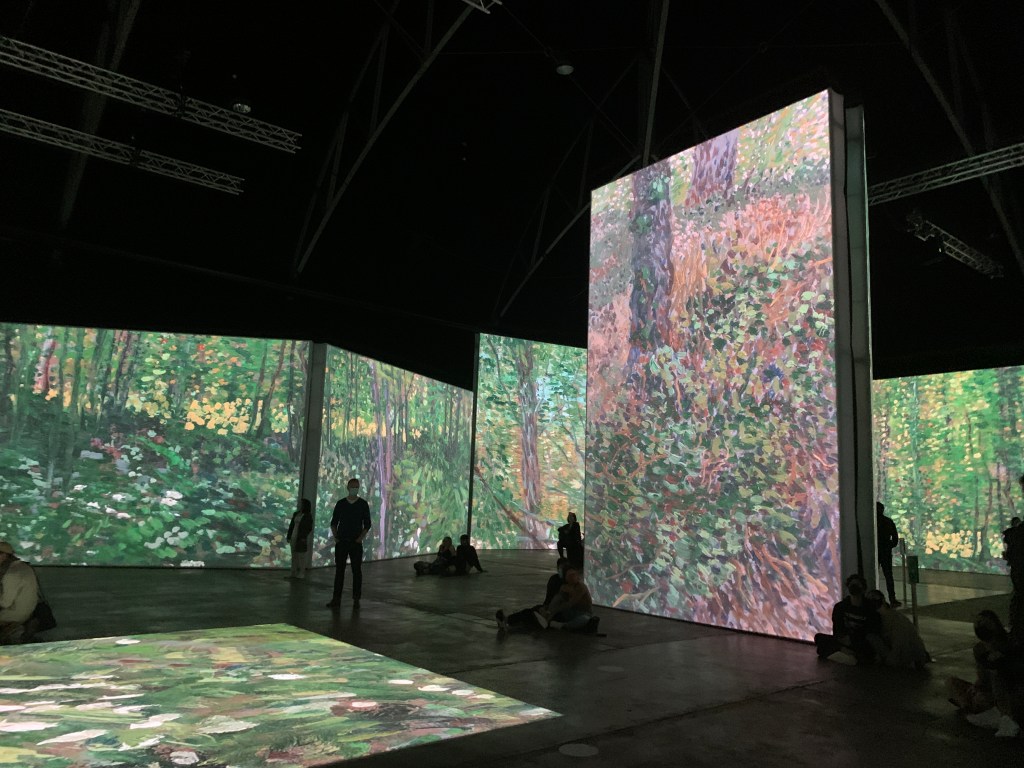
Recently, I was lucky enough to secure a ticket to the popular Van Gogh Alive art exhibition that has been popping up around the globe. I didn’t quite know what to expect, as frankly I had a very limited understanding of Van Gogh and had up until this point remembered him as the artist who cut off his own ear.

3D reconstruction of the bedroom of Van Gogh

However, I was lulled by the promise of a unique and immerse visual experience that was different from your atypical art exhibition so I decided to see what it was all about and I definitely do not regret it! Once you enter the official exhibition, you are surrounded by large moving panels of his artworks and are free to simply stand and absorb an audiovisual display of his life through art.

Beforehand, you also get to learn about Van Gogh and the struggles he had gone through that had quite a tragic element to it, which reminded me that it is important to do what you love without worrying about the result, because so many great artists they not alive to see the fruits of their labour come to fruition. Van Gogh himself acknowledged the commercial risks of his artistic pursuit but went ahead regardless, which I think is something every creative has to be bold enough to embrace.

I would especially recommend this experience to any fan of his works, art enthusiasts (or any member of the public looking for a fun date night idea as there were quite a few couples at these exhibits). Just remember to wear a mask!

Nurseries, coastal walks & picnics || Ideas for your next catchup

Lately, I’ve been getting a lot more creative and putting more effort into planning ideas for social gatherings. Especially since dining at a cafe or restaurant is a bit more of a hassle than it was before (especially for larger groups), I’m finding greater enjoyment in doing activities with friends that require a bit more energy, such as shopping for house plants together at a local nursery, going on a coastal hike at a national park, or cooking up your favourite dish to share at your next picnic.

1. Nurseries

Lockdown has given be a great opportunity to consider revamping my space at home and making it more comfy – which makes shopping for plants a necessity (or at least, I’ve convinced myself that no house can be considered ‘well decorated’ without its own indoor jungle). It’s been a lot of fun learning about how to take care of different plants, and hunting for quirky, painted vases to settle them in. 

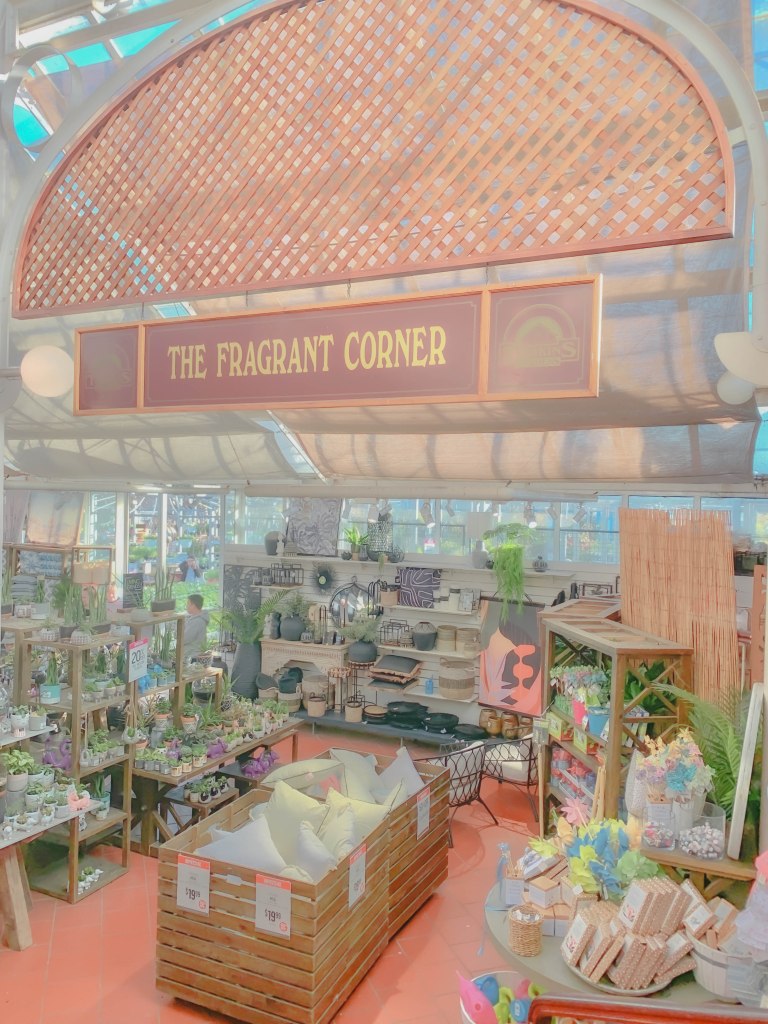
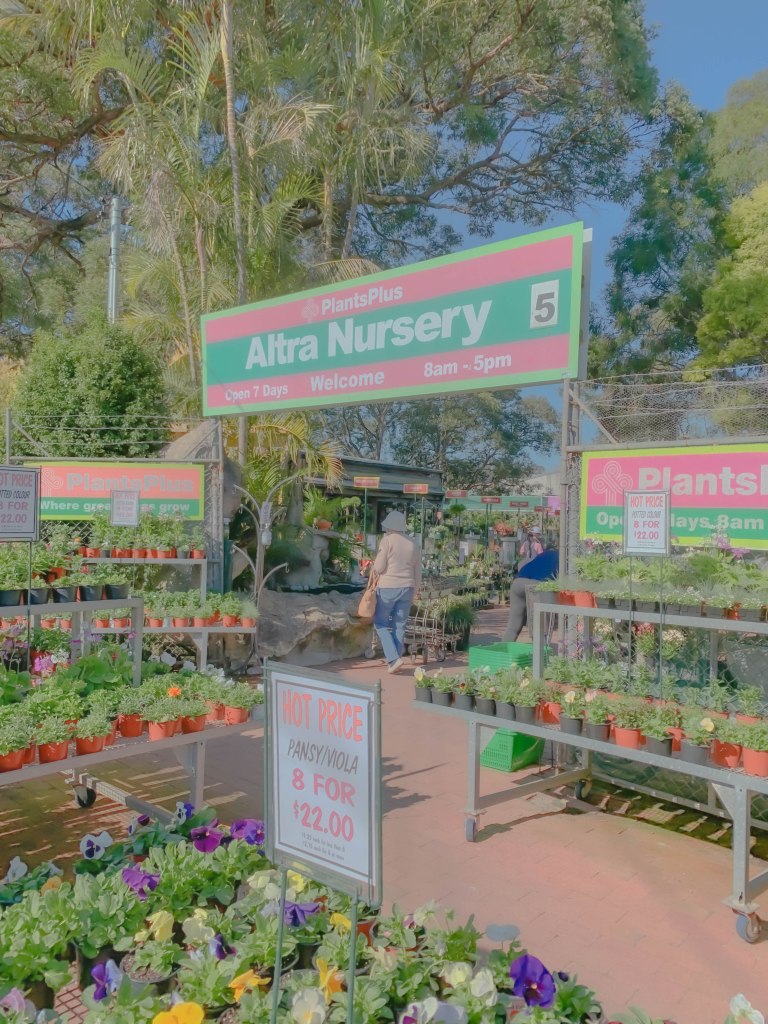
One of my favourite nurseries as a Sydney sider to shop at is Flower Power Garden Centre, which boasts a large assortment of both indoor and outdoor plants as well as a nice cafe in case you wanted to take a break to deliberate on your purchase (and grab a meal while you’re at it).

  1. Coastal walks 

Coastal walks have also served as a nice way for me to get a bit of exercise, some of my favourite spots being Cronulla Beach which I find is generally not as crowded as some of Sydney’s other beaches (Bondi Beach…*shudders*) and also is surrounded by many beautiful cafes (with a lot of vegan options). 

Another location which is excellent for coastal walks is the Royal National Park, which is a bit of a drive from central Sydney but definitely worth it as it is one of NSWs best parks with plenty of coastal cliffs lookouts and secluded beaches for a peaceful retreat. 

Royal National Park
  1. Picnics 

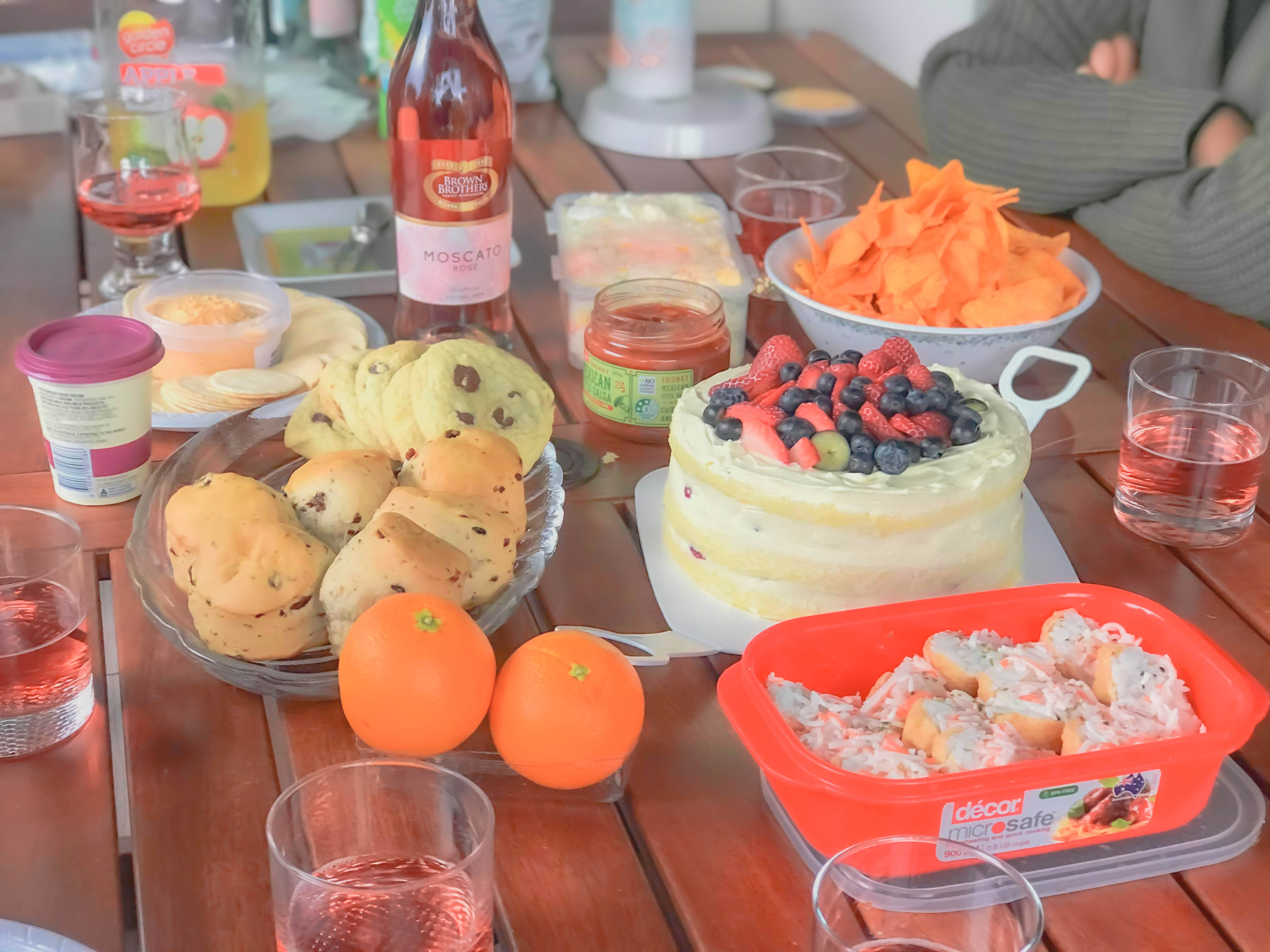
And of course, I have to include picnics on this list. Not only has it given me a chance to show my friends that I can cook (somewhat…), but it’s just been great seeing what other people have made and assembling it all together! This time, I brought choc chip cookies while a couple of my friends brought potato salad (everybody’s favourite), a gorgeous sponge cake drizzled with cream and berries, and Japanese Inari sushi stuffed with crab meat.

Of course, the host who kindly invited us to her backyard for picnic brought the essential item to complement our picnic… a bottle of moscato!

The importance of Quiet Persistence || A close analysis of Miyazaki’s ‘Spirited Away’

Opening scene

Spirited Away is hands down one of my all time favourite films and Studio Ghibli’s most iconic animated features. While the film is often known for its gorgeous, hand-drawn animation, my analysis focuses on the storytelling or human element of Spirited Away – which I think deserves equal appreciation for its excellent portrayal of the development of its main protagonist ‘Chihiro’, a young girl who manages to achieve true maturity upon learning to adopt to a new, challenging environment.

If this plot sounds familiar to you, it’s because it is meant to be: everyone goes through this journey at some point in time – when they’re moving to a new country, starting a new job in a different town, or simply embarking on a new chapter of their life.

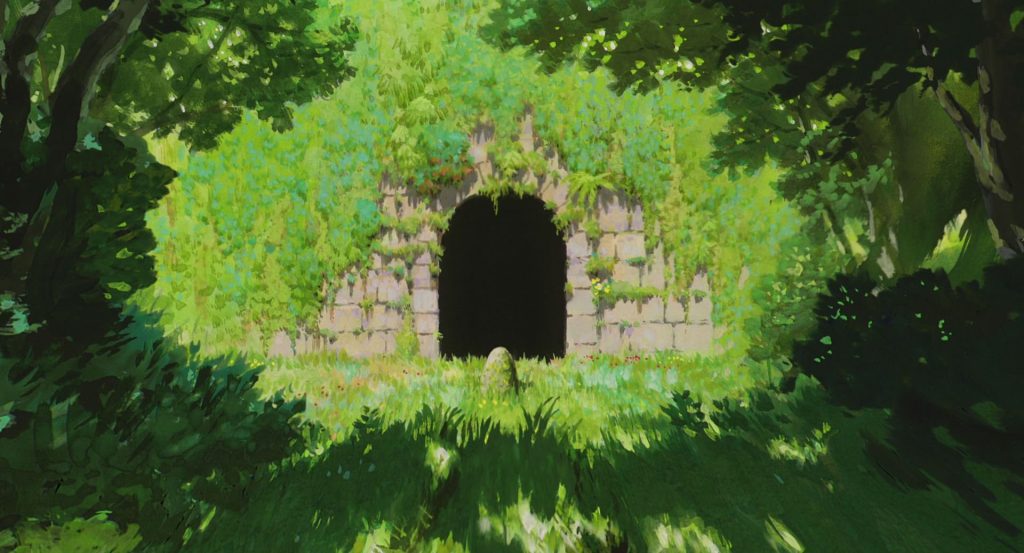
Entrance to the spirit world

What stood out to me in particular about Chihiro’s journey upon rewatching the film, is the notion of Quiet Persistence, which arguably becomes Chihiro’s defining character trait as she journeys through the spirit world and one which marks her transformation into a mature, young lady.

What is Quiet Persistence? Well, as Miyazaki implies, it’s something you acquire when you set goals that are motivated by love, not greed or flattery, and when you strive for those goals without complaining or becoming distracted.

His message really shines through when you compare Chihiro’s actions throughout the film with the behaviour of other spirits in the bathhouse. Chihiro knows what is important to her – the people she loves. In the beginning, this only included her family and her sole goal was to save them by finding a way to turn them back into humans. Her goal then expands to include saving Haku from the clutches of Yubaba, the boy/dragon spirit who helped her when she felt stumbled across the spiritual world.

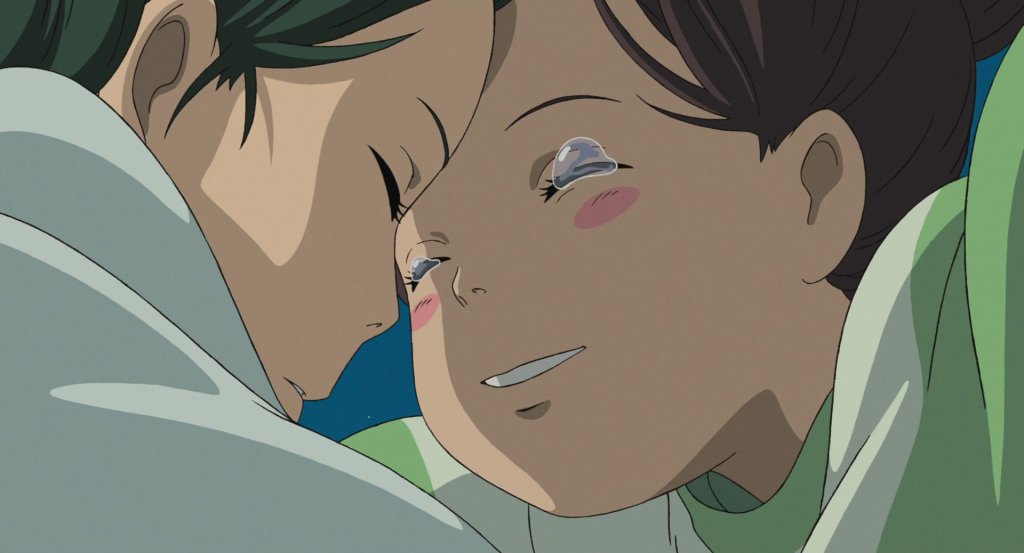
Chihiro helps Haku recall his identity

Why does Chihiro bother trying to do the latter when her original goal was already so difficult to achieve? Well, not because she is romantically infatuated with Haku, but because she grows to care for him on a deeper level purely because of what he has done for her.

Her love for these people is what drives her actions and decisions in the entire story. Chihiro never loses focus, even when she faces temptations such as No Face’s offers of wealth and obstacles such as Yubaba’s attempts to make her experiences in the spirit world a total nightmare.

No Face tempts Chihiro with gold

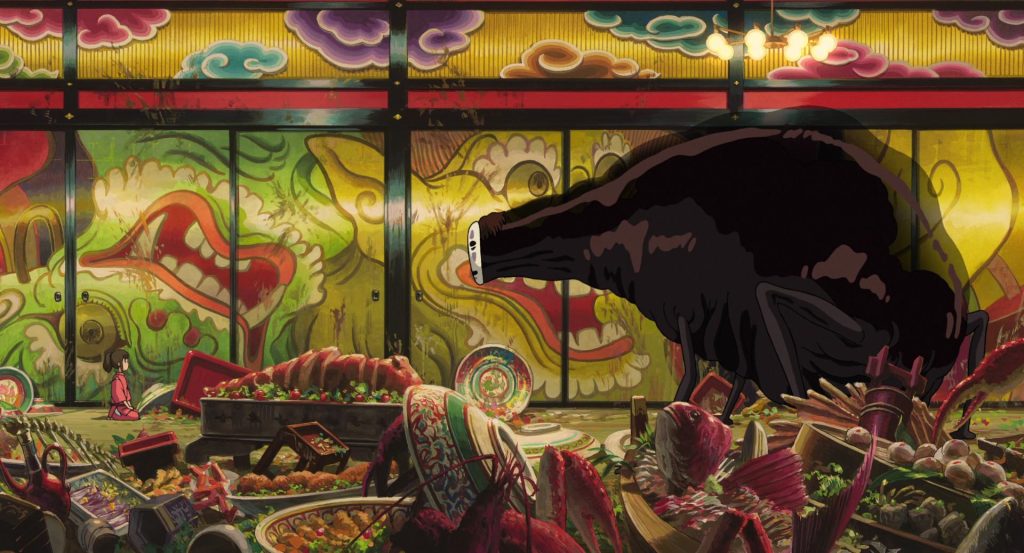
Contrast this to the behaviour of other inhabitants in the bathhouse. Whether it’s the promise of a tasty morsel, or mountains of gold, everyone seems to be motivated by either or both of these two things. Just recall the scene of the spirits cooking up a feast for their mysterious, wealthy patron ‘No Face’, enticed by the promise of gold. This doesn’t turn out so well, however, when this patron reveals himself to be a spirit eating, mentally unstable creature.

Similarly, Yubaba, the owner of the bathhouse, is willing to do whatever it takes to make her business profitable. When her business become incredibly wealthy overnight thanks to Chihiro’s effort, she is too busy basking in her newly acquired gold to notice the disappearance of her own baby.

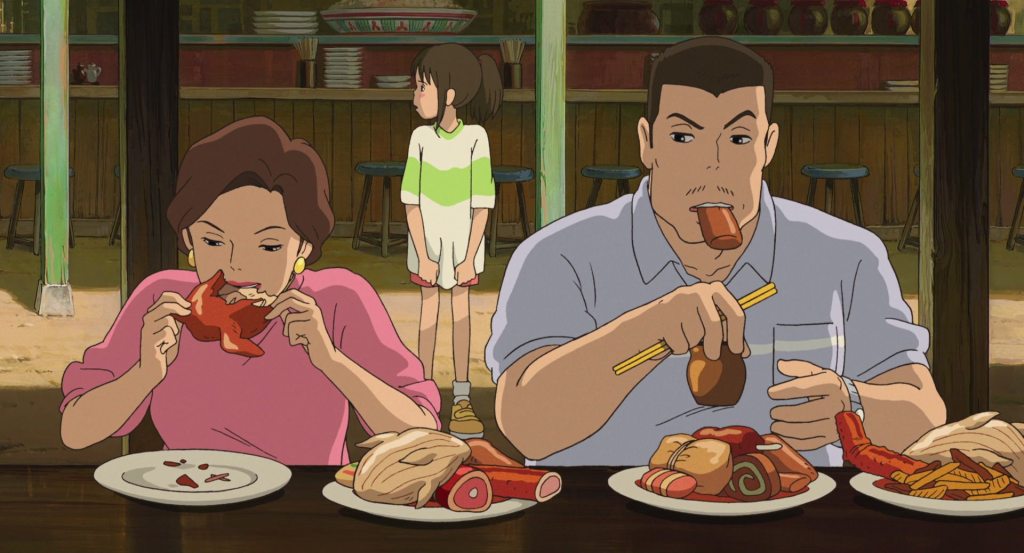
The message Miyazaki sets is clear – Greed blinds us and distracts us from what is truly important, our duty to those we love. When we are motivated by greed, when we strive for things we don’t truly need, we end up making very bad decisions. Want another example? Chihiro’s parents turned into pigs precisely because they had feasted on food that wasn’t theirs.

Chihiro’s parents help themselves

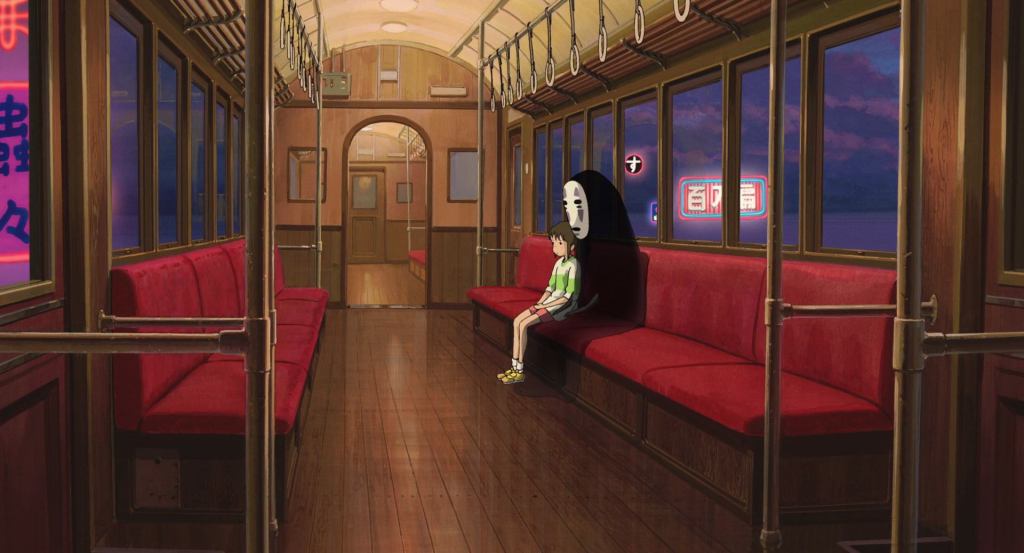
Miyazaki also shows us that persistence is a silent power; people don’t often witness the efforts that go into achieving your goals, and it is an inherent quality that can only be achieved by the individual, and the individual alone. This is shown, quite literally, in one of the most beautiful scenes in the movie – the train sequence. 

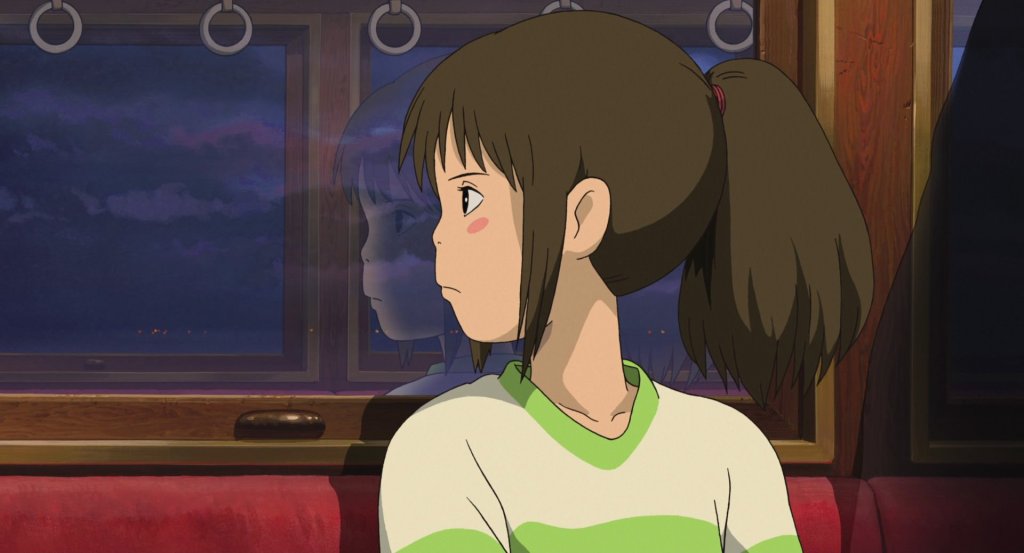
The scene shows Chihiro seated onboard a train that takes her across the sea, and cuts to her staring off into the unknown. She isn’t doing anything exciting or show stopping in this sequence. Rather, Miyazaki uses this moment of tranquility to allow audiences to reflect on the events of the plot so far, and fully realise Chihiro’s determination.

She knows that once she boards the train, there is no going back, but she does so anyway even though she doesn’t truly know what will come from her journey. Despite the uncertainty of her final destination, she patiently waits stop after stop until her station comes into view, ignoring the movement of the other passengers on board and the flashing neon lights of an unrecognisable, completely alien landscape outside.

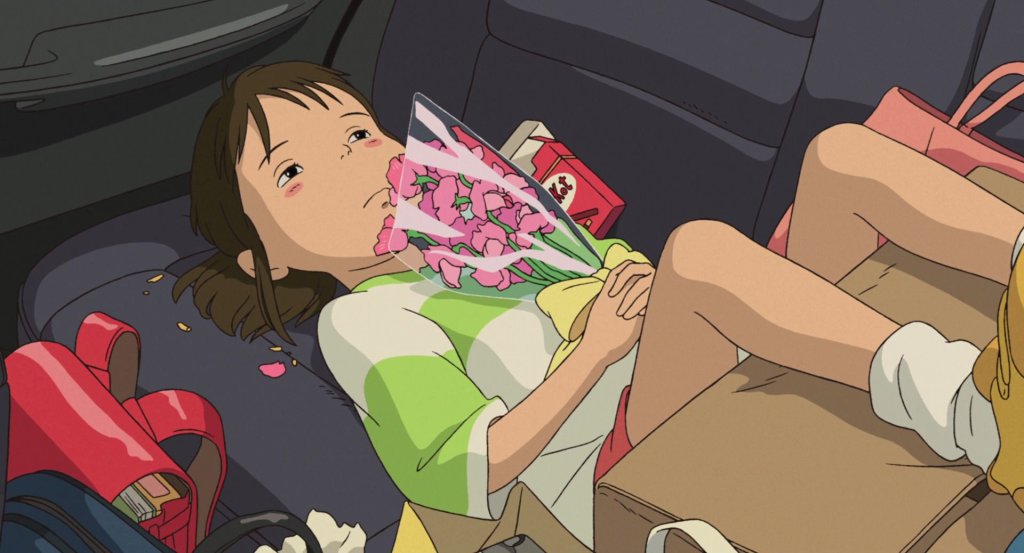
The Chihiro we see is entirely different from the sulky girl at the beginning of the film, who was complaining about the loss of her friends and her old life in her parents car as they drove off to their new place. In the spirit world, her problems have only escalated, but she refrains from complaining about the hardships she faced as she understands this would not assist her.

Confronting uncertainty, refusing to bow down to challenges no matter the difficulty – all this requires inner strength, a silent power – the power of persistence.

So now that I’ve reached the end of my post, I hope I’ve convinced you to watch Spirited Away if you haven’t already. The concept of ‘Quiet Persistence’ that it so flawlessly demonstrates through Chihiro’s transformation, is one which we should definitely remember when we are transitioning through a new and daunting stage of our lives – whatever it may be.

How to stop worrying and start living || A guide by Dale Carnegie

The past few weeks has been honestly quite a challenge for me. I just went through a gruelling job application process where I was met with a stream of rejections, all whilst dealing with online final exams, consuming the news on rising unemployment rates and coming to terms with the grim probability that the career I had planned was slipping away as the uncertainty of the future looms – like a dark, all engrossing cloud before the storm. 

It is at this time, that I decided to revisit a book I had read early in the year – ‘How to Stop Worrying and Start Living’, a guide by Dale Carnegie, the famous author of ‘How to win friends and influence people’. The value of this book, I believe, really comes to fruition in times of anxiety like this. 

Below are several of the insights I took from it that helped me calm down, separated into 3 different scenarios.

Overcoming worry in stressful situations:

Step 1. Analyse the situation fearlessly and honestly and figured out what was the worst that could possibly happen as a result of this failure.

Step 2. After figuring out what’s the worst that could possibly happen, reconcile yourself to accepting it, if necessary.

Step 3. From that time on, calmly devote your time and energy to trying to improve upon the worst which you had already accepted mentally.

Managing worries on a daily basis:

Step 1. Write down precisely what you are worrying about.

Step 2. Write  down what you can do about it.

Step 3. Decide what to do.

Step 4. Starting immediately to carry out that decision.

Breaking the habit of worrying all the time:

Rule 1: Keep busy. The worried person must lose himself in action, and remember that when you have nothing to do but lie on the flat of my back and worry about the future, you are making no improvement whatsoever.

Rule 2: Do not allow yourself to be upset by small things you should despise and forget. Life is too short to be little. The way to happiness is to cease worrying about things which are beyond the power of your will.

Rule 3: Use the law of averages to outlaw your worries. Ask yourself: What are the odds against this thing’s happening at all?

Rule 4: Co-operate with the inevitable. If you know a circumstance is beyond your power to change or revise, say to yourself “It is so; it cannot be otherwise.”

Rule 5: Put a “stop-loss” order on your worries. Decide just how much anxiety a thing may be worth and refuse to give it any more.

Rule 6: Don’t saw sawdust. Or in other words, don’t worry and dwell on things that have already passed.

Final words

A recurring message Dale sprinkled throughout his guide was the idea of taking things one step at a time, of not giving in to the irrational, but all too common fear that whatever setback or hardship you face will endanger the future you’ve been working towards or lead to the loss of everything you have now.

He reminds us to think to ourselves that ‘everyday is a new life to a wise man,” to remember “Happy the man, and happy he alone, He, who can call today his own: He who, secure within, can say: “Tomorrow, do thy worst, for I have lived today.” You must continue to move forward.

“God grant me the serenity to accept the things I cannot change, the courage to change the things I can, and wisdom to know the difference.”

extracted from part three, page 180

Picturesque villages of the Southern Highlands, Bowral & Berrima || Nowra Roadtrip Day 2 (afternoon)

Before I succumb to my procrastination tendencies and completely forget – here is the last post about the last limb of my two day trip to Nowra. So following from my last post, after stopping over during the morning at Fitzroy Falls and going on a walk through the wilderness and waterfalls, we decided to drive over to the surrounding towns and take a look for a place to eat.

Unfortunately for us, our first pitstop Bowral was a town that was brimming with people at midday, which meant that finding a seat for lunch at various, aesthetically pleasing cafes scatted around the town was basically impossible…unless you weren’t all that hungry and willing to queue up of course!

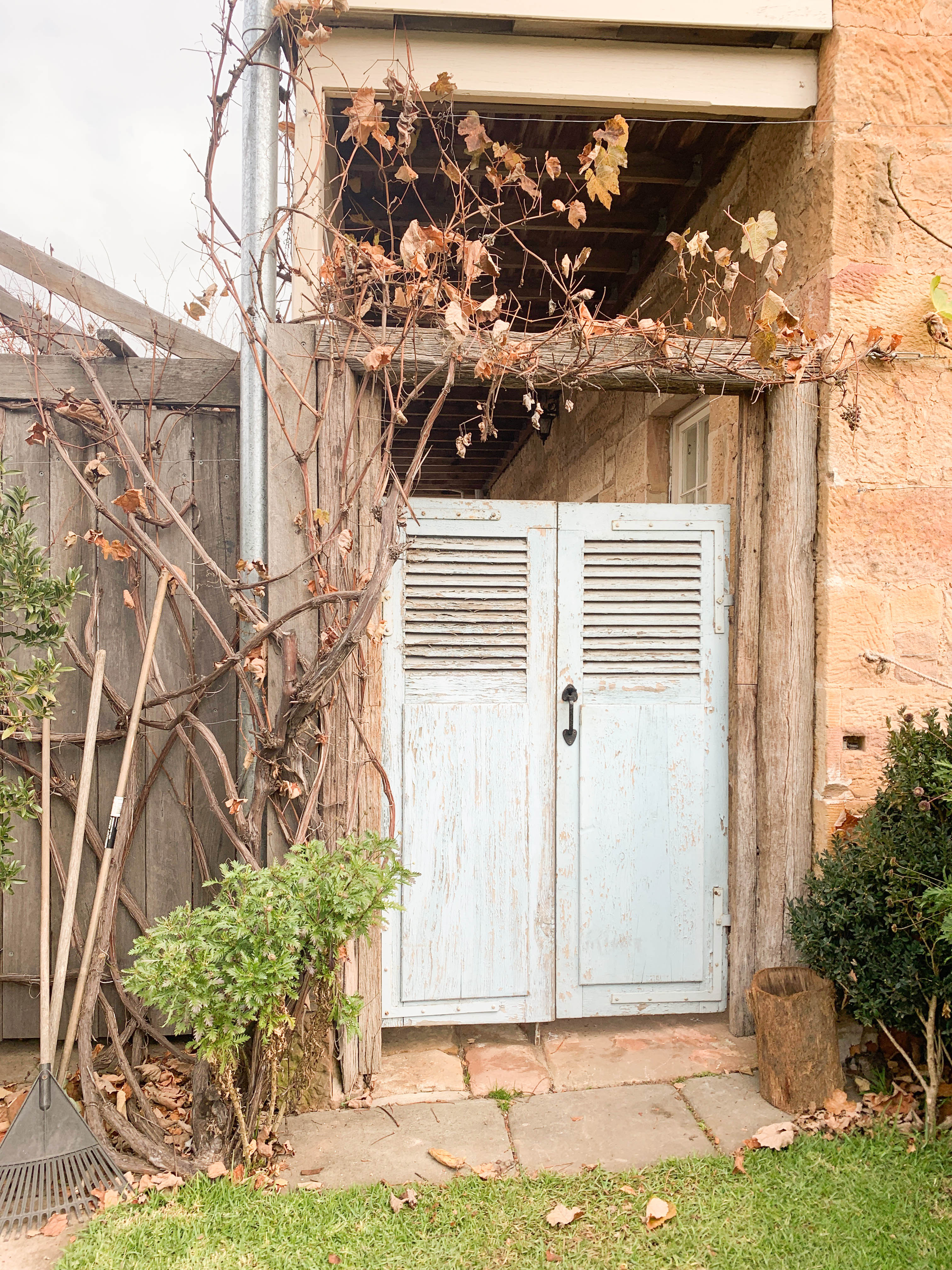
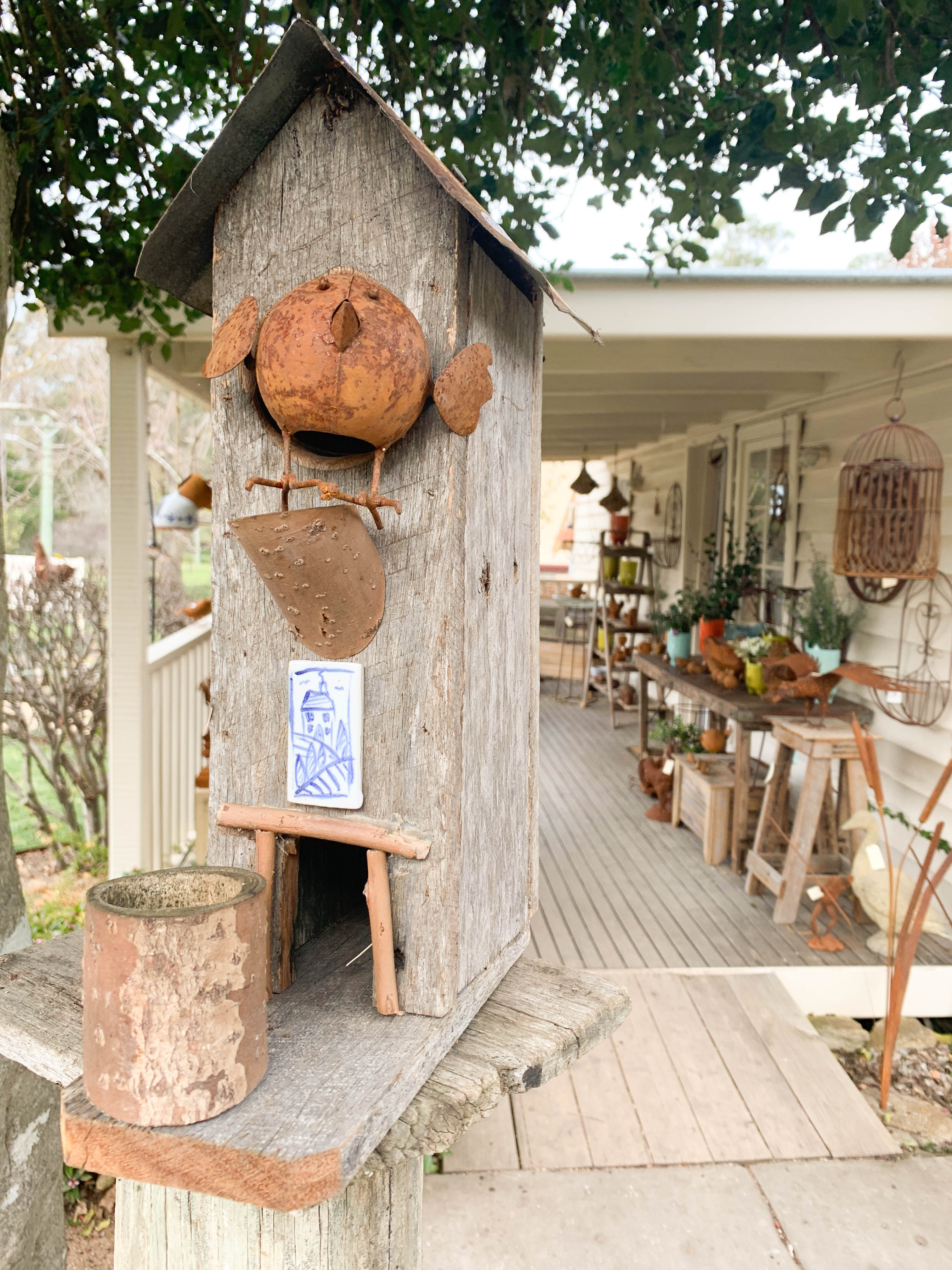
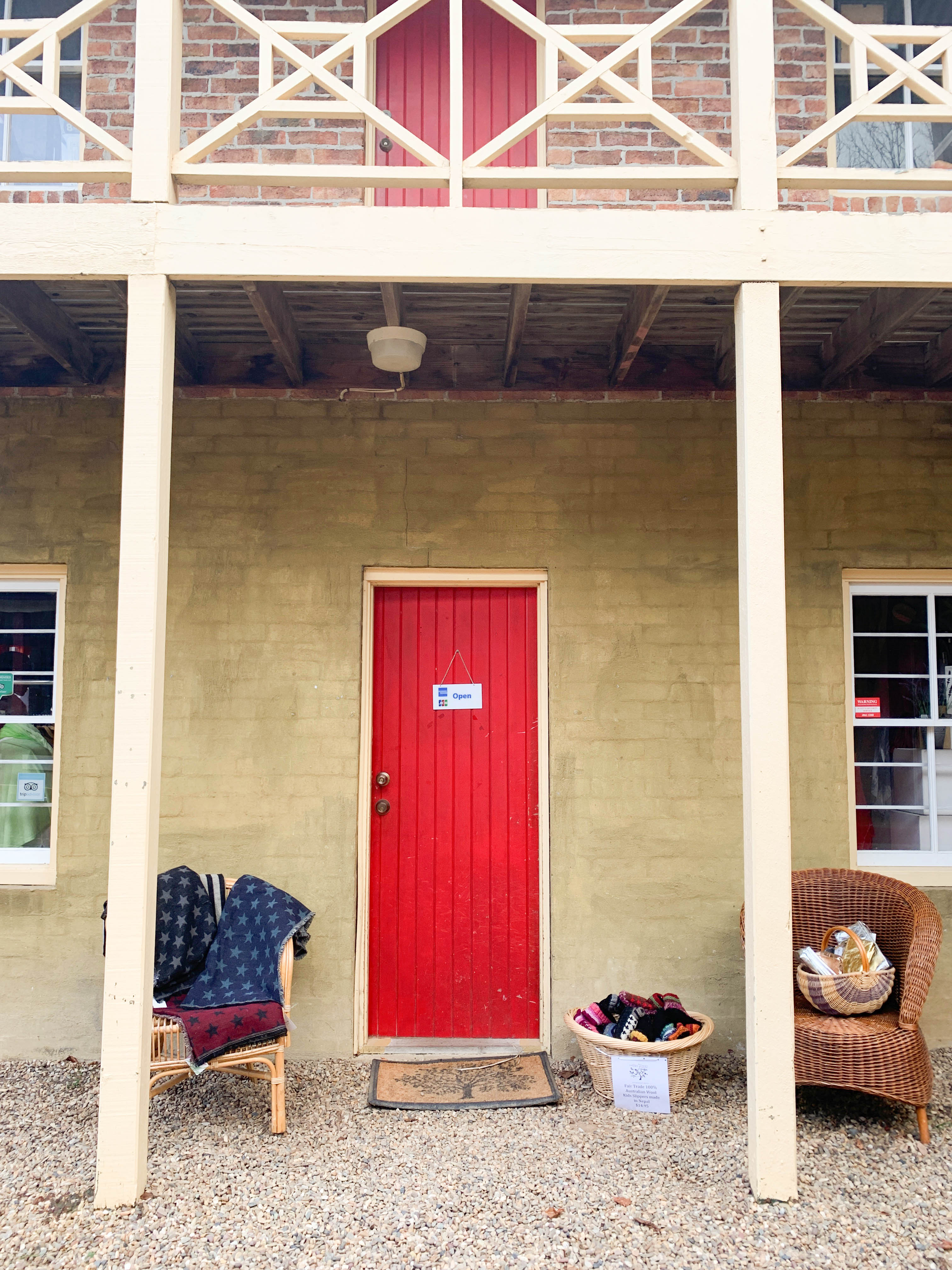
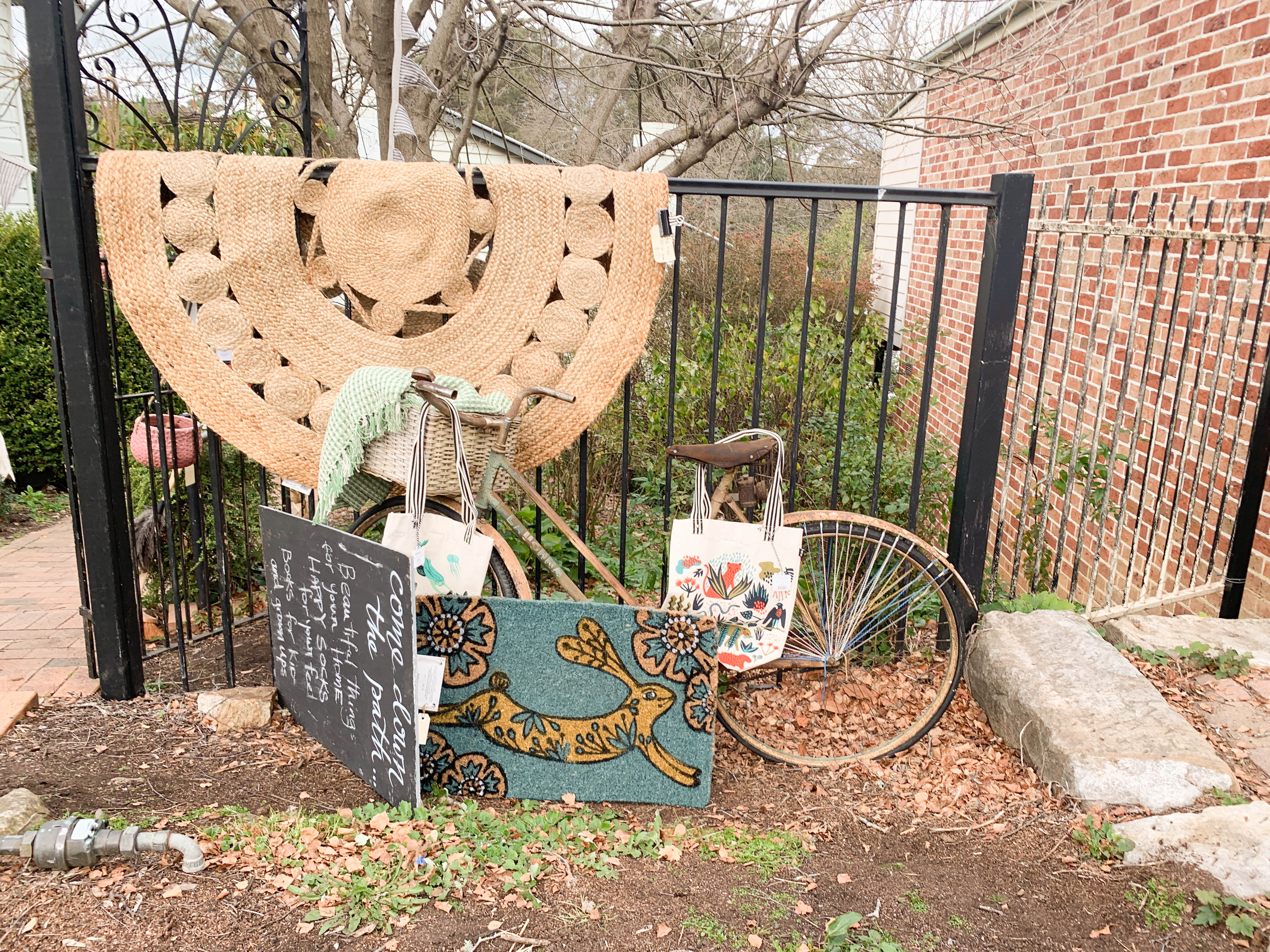
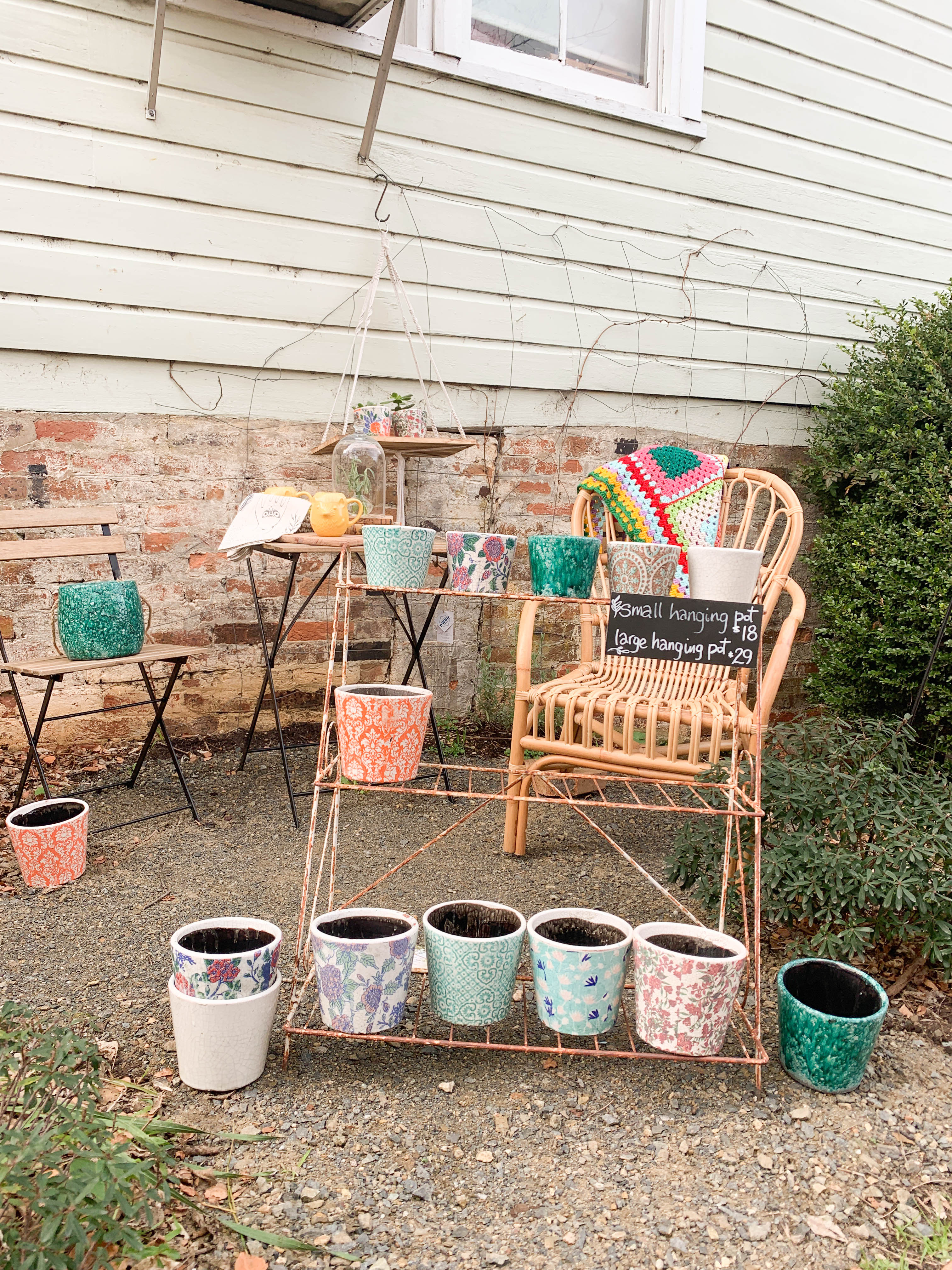
It’s a shame, but at least this meant I had a lot of time to wander around and really explore all the nooks and crannies of the town. Highlights included the beautifully decorated nursery, a stationary shop/cafe known as ‘The Press Shop’, and an antique shop with a bright red door overrun gnarly vines.

Bowral is definitely the town to visit if you’re a coffee sipping book lover or antique lover with an eye for all things nostalgic and quirky.

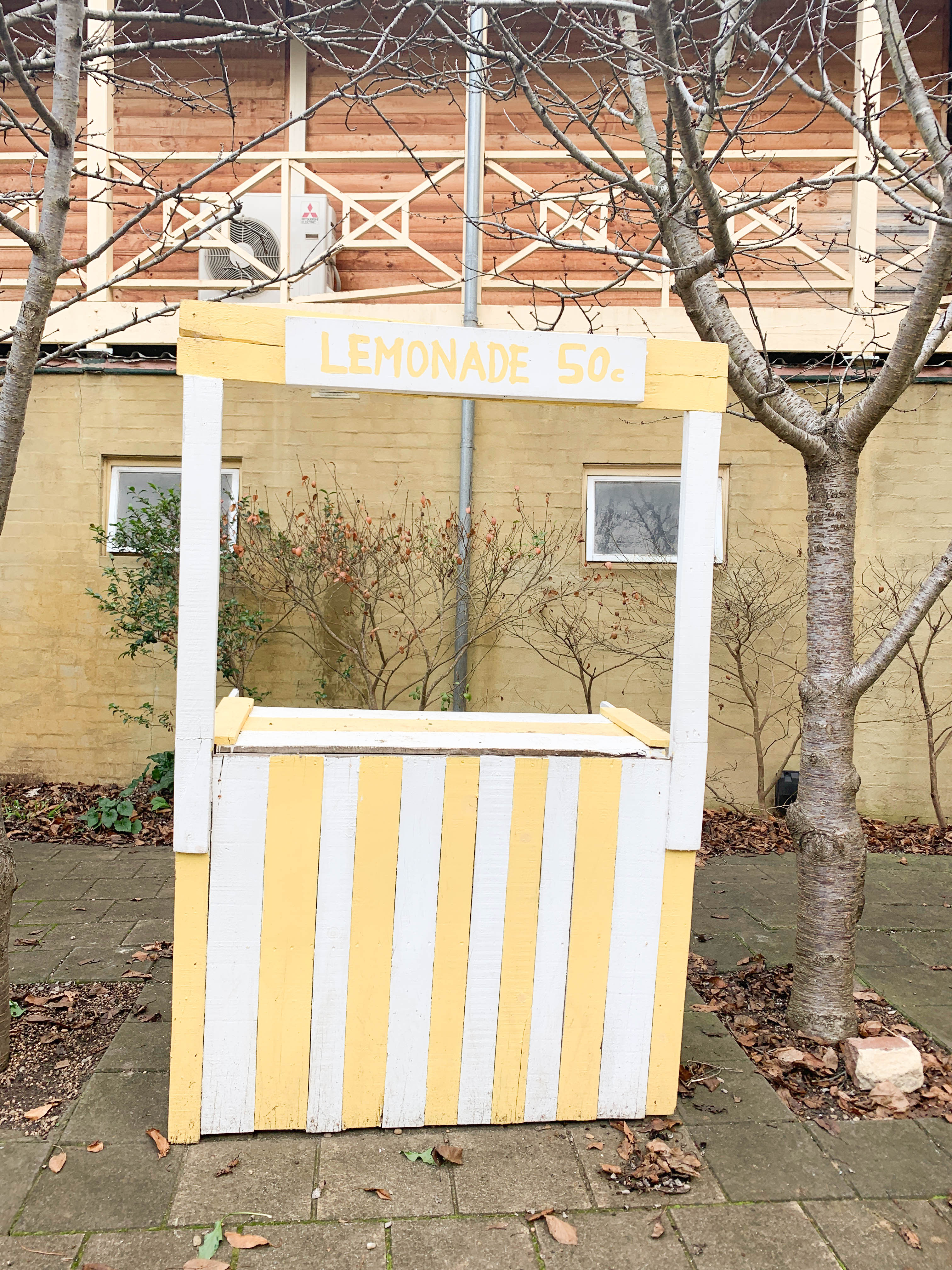
We wrapped up the second day of our trip by dropped by at the nearby town of Berrima, which also had plenty of wonderfully decorated shops to explore with a very autumnal, rustic and cosy vibe. I was especially fond of the 50c lemonade stand display (see if you can spot it below) which was just so cute. Home decor, jams, vintage items – Berrima has it all.

7 things introverts should know to survive in an extroverted world || Susan Cain’s bestseller ‘Quiet’

Just a week or so ago, I read former corporate lawyer turned writer Susan Cain’s book discussing the concept of introversion in a western society – an interesting and compelling read for anyone with a hint of introversion in their character which they may have felt the need to subdue at times to meet expectations to be more extroverted.

Cain teaches many important lessons, that overall have one clear message: there is nothing wrong with being an introvert. This was particularly heartwarming to hear, as the societal pressure to be outgoing can sometimes make us feel unnecessarily insecure about our identities in a way that isn’t very healthy. Below, are the 8 lessons I learnt from her novel:

  1. The world doesn’t cater to you as much as your fellow extroverts, but you can still make a mark

Cain prompts us to come to terms with the fact that our society caters to extroverts, and discover that this is the likely source for our discontentment with our introverted qualities. She describes how we as a society are living in a value system where the ideal self is an extrovert – gregarious, alpha and comfortable in the spotlight. Someone who prefers action to contemplation, who works well in teams and socialises in groups. We admire the person, who is comfortable “putting themselves out there”, more so than the ‘thinker’. This ‘extroverted ideal’ is so ingrained in our culture that in daily life, you might feel a sense of guilt when you decline social invitations to read at home, or eat alone in a public area. 

Cain dubs the era we live in, as one which panders to a culture of personality’ – a shift from the culture of character. In a culture of character the ideal self is serious, disciplined and honourable. What counted was not so much the impression made in public but how one behaved in private. On the other hand, a culture of personality focuses more on how people perceived them, how to captivate, be bold and entertain others, the social role demanded was that of the performer. Social media has definitely spurned this trend as well!

  1. You need space and time to recharge away from others.

As an introvert, Cain reminds us that we re energise by being alone. This is very different from extroverts, who need to recharge when they don’t socialise enough.  Many introvert are also ‘highly sensitive’, an actual term in psychology. You may identify with this quality if you are more moved by a musical piece such as Beethoven’s “Moonlight Sonta” as Susan describes, have a strong sense of conscience or feel nervous under evaluation. 

It follows that it is especially important for introverts to find their ‘restorative niche’, a place to go when you want to return to your true self; it can be a physically place or a temporal one, for example if you’re at work, a cubicle where you can take a break between presentations or meetings. Carving out this niche can mean cancelling your social plans on a weekend before a big meeting at work, practicing yoga/meditation or choosing email over an in person meeting. Failing to have a restorative niche, Cain warns, is likely to result in the rapid depletion of your health and energy.

  1. Introvert can make good leaders in the workplace

Susan’s research finds that introverted leaders perform particularly well with proactive employees, as they are uniquely good at leading initiative takers through their inclination to listen to others and lack of interest in dominating social situations. Therefore, they are likely to hear and implement suggestions, creating a virtuous circle of productivity.

  1. Introverts have great potential to be more creative than their extroverted counterparts

Great creativity comes from working alone. Steve Wozniak said that you’re going to be able to design revolutionary products and features if you’re working no your own. Not as a team. More creative people tended to be somewhat introverted, interpersonally skilled but not particularly sociable, and more independent and individualistic.

A major reason more creative people are introverts, could be that introverts prefer to work alone, and solitude is often a catalyst for innovation. Research shows that college students who tend to study alone learn more over time than those who work in groups. This is because when you are alone, you are free from distractions and can engage in deep focus, accomplish more challenging tasks. Teens who are very outgoing and spend little time alone often fail to cultivate their talents because practicing an instrument, programming or writing requires a solitude they dread. 

  1. Being an introvert doesn’t mean you have to stick to your temperaments – stepping outside of your comfort zone is still necessary at times

If in your life or career there is something which matters strongly to you, sometimes you have to do things that scare you to fulfil your goal. Such as public speaking. While this may often be more difficult for introverts, Susan teaches us that this is doable through proper preparation, training and the courage to follow your convictions. Introverts are capable of acting like extroverts for the sake of things they value ie people they love or work they care about.

Sometimes you have to do things that are ‘out of character’ for you, to meet your goals. For example, you could strike a deal with yourself that you’ll attend a set no, of social events in exchange for not feeling guilty when you beg off. 

  1. Your cultural background could determine whether you’re an introvert or extrovert

Eastern cultures are more likely to have an ‘introverted ideal’, Susan points out. Parents schooled a generation ago in Asian countries were taught a quiet style, classrooms emphasised listening, writing, reading & memorisation. Talking is simply not a focus, and even discouraged. How Asian-Americans or Asian-Australians should behave in a western classroom is a topic of great controversy, some say the educational system of western cultures can learn a lot from the sound of silence. Asians view class participation as ‘talking nonsense’, while westerns call this ‘class participation’. Similarly many asians show esteem by minimising conflict, but for extroverts conflict or disgreement is not likely viewed as a sign of disrespect but as a signal that the opposing party is concerned and is passionately engaged in the task. 

All these cultural differences boil down to the fact that asians live in more team orientated societies, often subordinating their own desires to the interests of the group, which may be why quiet, humility and sensitivity are prized as they foster group cohesion.

However, for asian Americans, failing to fit into the more extroverted ideal may create more than just social unease – it could have effects on their pay check in western societies.

  1. Soft power

One insight I found very interesting was a quote from a professor teaching asians ‘extroversion’, which stated that you can be the smartest, most capable person but if you can’t express yourself aside from showing your work, you’ll be under appreciated. Many foreign born professionals experience this; you become viewed as glorified labourer not a leader. 

For these professional to be themselves whilst achieving workplace success, it is important to master ‘soft power’. This means rallying people to their cause through conviction rather than dynamism. Your communication skills have to be sufficient of course, to convey the message, but if an idea is good, people shift, if you are passionate about it, you will attract people who want to share your cause. Soft power is quiet persistence. Exercising this will help you build up a team.

To be quietly persistent means focusing on an ultimate goal, refusing to divert energy to unnecessary skirmishes along the way (like what Marcus Aurelius said in his novel. 


So there you have it! A really long post but clearly I had a lot to learn from this novel.
Drive to Fitzroy Falls and other small detours || Nowra Roadtrip Day 2

The first official day of exploring the surrounding regions of Nowra included no other than a visit to the famous Fitzroy Falls, located in Morton National Park about a 41km drive via Kangaroo Valley and Nowra Road.

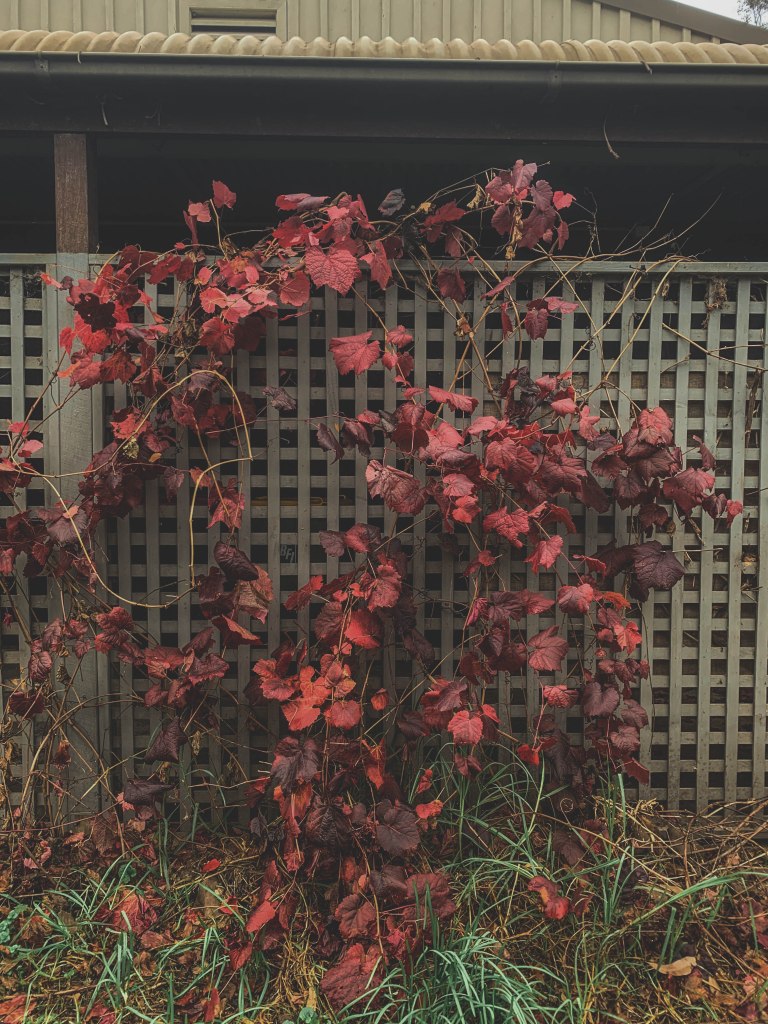
Before we made it to the national park, we stopped by Hampden Bridge – Australia’s last surviving wooden suspend bridge only to find…it was under construction. Luckily there were still things to see nearby, including a rustic, abandoned tea house enveloped in crawling, scarlet vines and a downhill walking track to a still river under the bridge. It’s so nice sometimes to just lose yourself in nature, and meander around – you never know what you can find!

When we eventually arrived at the Fitzroy Fall visitors centre around an hour to midday, it was already teeming with people so I would definitely recommend going earlier in the morning if you’re looking for easy parking!

There were two trails at the site (East Rim and West Rim), and we took the more popular West Rim track which took us to various lookouts with spectacular waterfall views. A vendor in a nearby village told us that the East Rim trail is worth it as well, so if you have the time and energy, why not go for both?

Also as I’m writing this, I just want to sat that if you’re in a country where lockdown restrictions are still in place, my heart goes out to you because I understand how difficult it is not knowing the next time when you can be safely back on the road again…

I’ve very grateful that things are currently calming down in Sydney, and I’m able to go on short local trips like these because it makes me appreciate the simply joys of just being able to immerse yourself in something so simple as a walk through nature.

Treetop walking at Illawara and Sunset walks down Jervis Bay || Nowra Roadtrip Day 1

Over the long weekend, I went on a pleasant road trip from Sydney to Nowra, and made a few stops along the way – including the Illawara Treetop walk in the morning and the beautiful Jervis Bay in the afternoon.

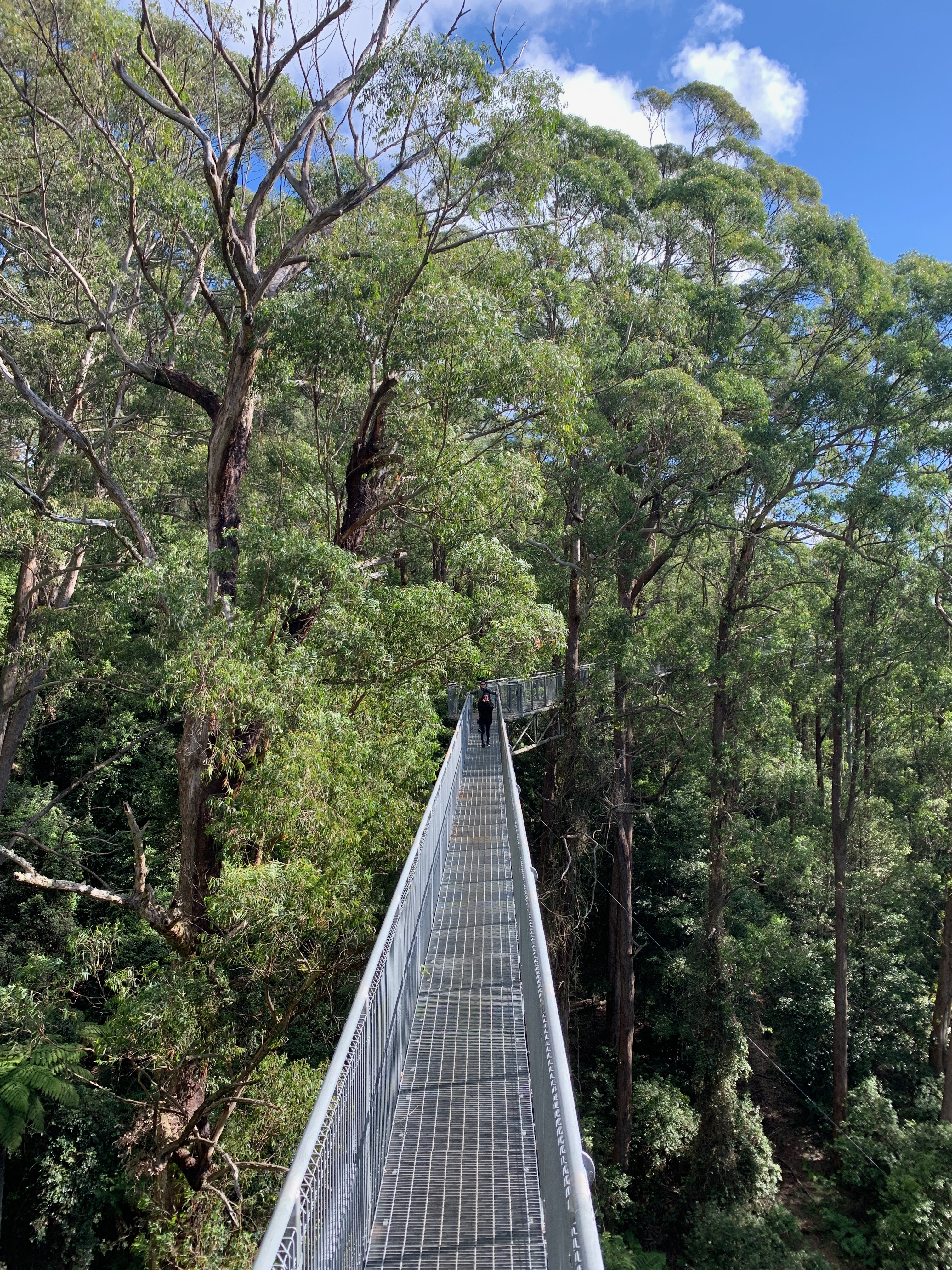
We managed to snag some group vouchers to the Treetop Walk and I’m glad we did because it was a very pleasant walk (maybe not so much if you’re afraid of heights!). Also worth visit if you’re looking to go zip lining as a beginner as well.
View from the top of the towers at Illawara Treetop Walk

The visit to Jervis Bay really was the highlight of the day though. After quite a long drive from Sydney and finally arriving at Nowra where we checked in to our accomodation (we stayed at ‘Quest Nowra’), we decided to go catch the sunset at Plantation Point, Jervis Bay.
I had heard of how beautiful the beaches were at the Bay, and safe to say I was not disappointed. It’s also a great place to walk your dog, listen to some relaxing tunes, or crack open a cold one with the boys (or girls) while you watch the sun slowly set – and yes I saw people doing all three.

Ikigai // A Japanese concept on how to lead a fulfilling life

Finding out what to do with your life can be hard sometimes. 

So when I came across this fascinating concept of ‘Ikigai’ which literally translates to ‘a reason for living’ – a concept that apparently the residents of a Japanese island with the world’s longest living people follow religiously, I just had to find out more. 

Ikigai is the idea of seeking a purpose in everything you do, of finding a sense of deep fulfilment beyond mere happiness. It is not limited to satisfaction at work – hobbies, friendships, community and travel all contribute to your ikigai.

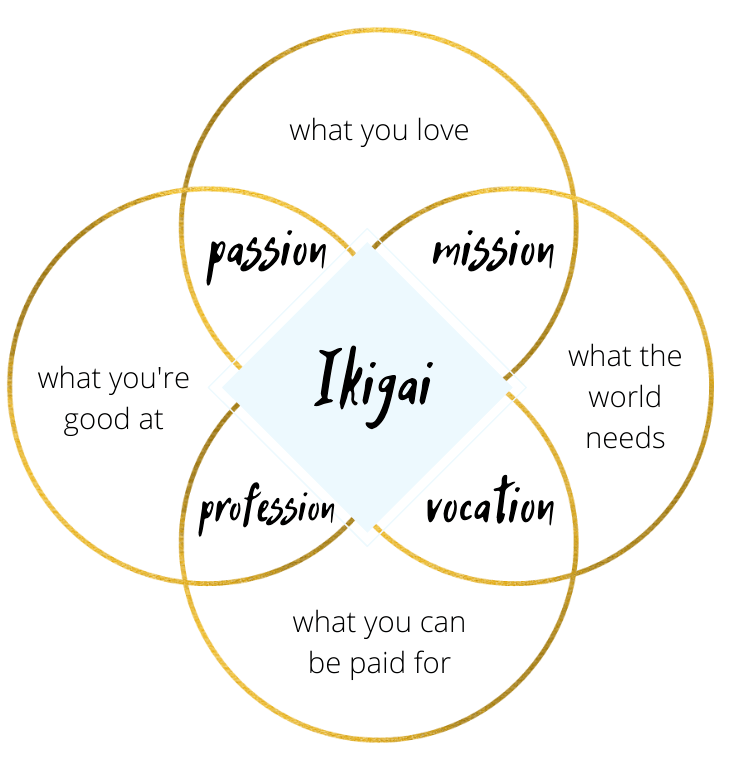
According to these villagers, there are four things you need to acquire to feel a sense of ‘Ikigai’. These are:

  • Passion: what you’re good at and love
  • Mission: what you love and what the world needs
  • Profession: what you are good at and what you can be paid for
  • Vocation: what you can be paid for and what the world needs 

To understand what these terms all mean and how they overlap with one another, it is helpful to look at these terms on a Venn diagram: 

So if you’re trying to find out what you want to focus on, it might be helpful to think to yourself – do I have these four things and if I don’t, which one am I missing? How might I be able to acquire it?

If you’d like to learn more about ‘Ikigai’, please take a look at Hector Garcia & Francesc Miralles’ novel Ikigai: The Japanese Secret to a Long and Happy Life

3 relaxing shows to cure your stress and anxiety

As someone who deals with a mild form of anxiety and is prone to feeling overwhelmed when things get busy, it can sometimes be hard for me to find ways to wind down after a long day. Luckily I found my cure in watching tv shows and short films which possess a uniquely therapeutic and calming element.

If you struggle with meditation, but suffer from anxiety, here are some shows I would highly recommend which have gotten me through some tough times.

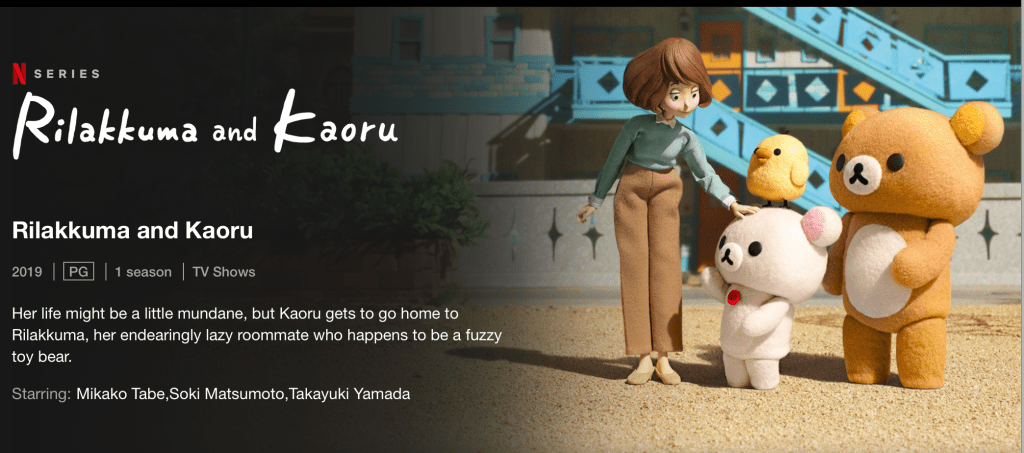
Rilakkuma and Kaoru (Netflix)

Looks can be deceiving – this is an animated show featuring cute mascot characters famous in Japan, but it is not a kids show.

The main character is a twenty something Japanese woman living by herself in a big city, having moved from the country. The story follows her journey upon encountering a few unexpected visitors in her house (cue the bears).

As a result, the show explores surprisingly deep concepts with nuance, in particular the notion of transience – of friends departing as we grow older, of the struggles of fitting in at work, of living alone in a city indifferent to your existence.

Each episode ends with a short uplifting message which reinforces the idea that it is okay to feel the way you’re feeling and imparts a dash of optimism before the credits roll by. Definitely a must watch for someone who relates to the themes of the show, and is looking for a way to wind down at night. 

Liziqi (YouTube)

This YouTube channel is probably unlike anything you’ve ever seen. It follows the day to day activities of a woman named ‘Liziqi’ who lives in the countryside area of Sichuan – a province in China.

Dubbed as a real life Disney princess, Liziqi not only has many farm animals tailing her, but she is also able to make almost anything from scratch – whether that be culinary foods such as traditional Chinese sweets, clothes or furniture, all using the resources found in her own hometown and its surrounding agricultural bounty. 

The stunning cinematography, beautiful scenic landscapes and careful curated manner in which Liziqi’s crafting process is filmed makes the series a very therapeutic watch, and briefly transports you to the countryside where the troubles of modern life seem to disappear temporarily. 

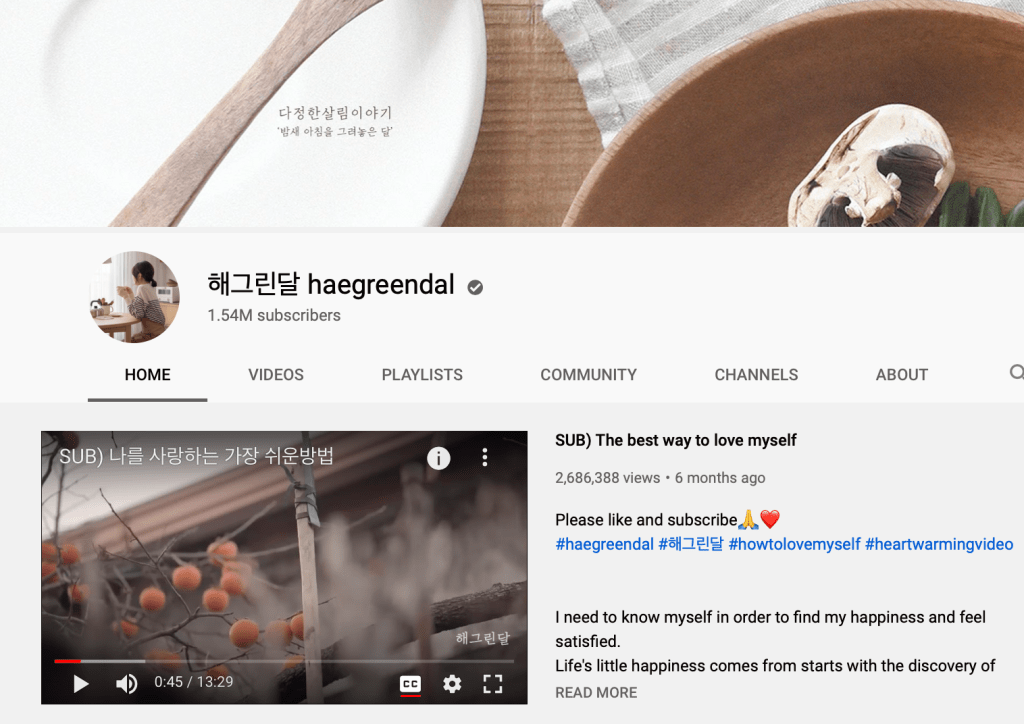
Haegreendal (Youtube)

Another Youtube channel which is stellar in terms of quality, Haegreendal is a Korean content producer who makes videos surrounding her domestic life as a mother, and focuses on reminding viewers of the simple joys one can create for themselves at home.

Her beautifully crafted videos make mundane activities such as cooking, organising the home and taking small walks with your children or pets look enjoyable and almost dream-like, as the sepia tones she uses for her videos infuses the settings with a sense of nostalgia. 

So there you have it, 3 shows/ series to watch if you’re feeling anxious or stressed. Hope these help!

Design a site like this with WordPress.com
Get started